The Part of Falling in Love Again That Nobody Talks About
- Georgia Clare

- 2 days ago
- 9 min read
Why opening your heart to love after heartbreak can feel so complicated when you've finally built a life you love.
I used to think falling in love again would be the hard part. After everything I'd been through, I imagined I'd stay cautious, struggle to trust, keep people at arm's length in case my heart got broken again.
I was completely wrong. The hardest part wasn't falling in love. It was realising how much I loved the life I'd rebuilt.
For the first time in my adult life, I had a home that reflected me: my own routines, my own way of spending a Sunday morning. I could disappear into the forest for a walk, spend an afternoon writing, or drive somewhere new on a whim. There was no compromise to make and nothing I had to explain to anyone else.
I'd worked hard to create that life. It hadn't appeared overnight, it had built up slowly, over hundreds of ordinary days, through grief and uncertainty, and through learning to enjoy my solitude instead of fearing it.
Eventually, something unexpected happened. I stopped waiting for my old life to come back. I absolutely loved the one I had.
Then, when I wasn't looking for it, someone wonderful came into my life.
People often talk about finding love after heartbreak as if it's the happy ending, as though once you've met the right person, the difficult part is over. But I discovered something nobody had warned me about.
When you've spent years rebuilding yourself, love asks for something harder than an open heart: room to exist inside a life you already love.
Making space means letting another person into a life that already feels full. It means figuring out how two sets of routines fit together. It means deciding whose house you'll spend Christmas in, and wondering whether you'll still have time to write every morning, or hold onto the independence you fought so hard to get back.
Those questions can feel surprisingly unsettling. The relationship isn't the problem. My life has simply become precious to me.
I think this is especially true in midlife. When we're younger, many of us imagine building a life together from the beginning, and we expect our routines, friendships and plans to evolve alongside the relationship. By our fifties, it's often very different.
We've already lived whole chapters, survived things we never imagined surviving, and learned who we are when nobody else is defining us. It also means we have something to protect now.
For a while, I wondered whether this hesitation meant I wasn't ready, or whether I was still carrying fear from the past. Then I realised something that changed how I saw it.
I wasn't afraid of loving again. I was afraid of losing myself again.
Heartbreak hurts because we lose someone we love, but for many of us, especially after a long marriage or relationship, we also lose the version of ourselves that existed within it. Our routines change, our identity shifts, and the future we'd imagined disappears overnight.
Rebuilding turned out to be less about healing from another person and more about slowly becoming myself again.
So when love arrives a second time, of course we're more careful. These days it's the life itself we're guarding, not just the heart inside it.
It's not that we don't love as deeply. We've just learned that our own life matters too.
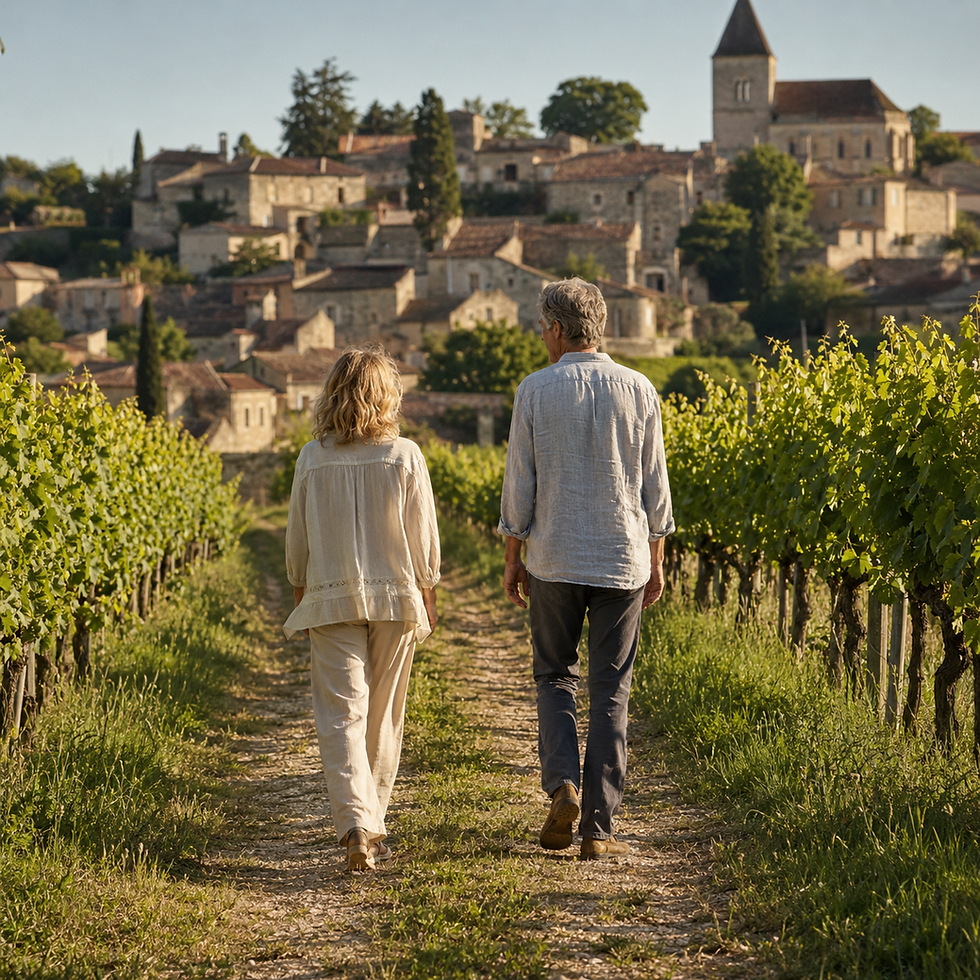
I always thought that love meant giving someone everything: your time, your attention, your energy, your plans, your future.
When you're young, that often feels romantic. You naturally weave your lives together until it becomes difficult to remember where one person ends and the other begins. There's something beautiful about that, but there's also a risk. If the relationship ends, you don't just lose the other person. You lose parts of yourself too.
I didn't understand that until I had to rebuild my life. Bit by bit, I discovered things that belonged only to me: morning walks through the forest, writing before the rest of the world woke up, yoga, reading for hours without feeling guilty, building a home that felt peaceful, cooking meals just for myself, creating work that gave me purpose.
None of those things depended on anyone else. They became the foundations of a life that felt solid. That felt mine.
That's why falling in love again can feel surprisingly complicated. It isn't that you're comparing one person with another. You're asking a different question altogether: can I keep being myself in this relationship?
I don't think that's a cynical question. I think it's a healthy one.
The younger version of me would probably have rearranged her whole life around love: changed routines, cancelled plans, made room for someone else without giving it much thought. These days, I don't want to do that. I've learnt that the life I've built deserves protecting too, but not because I love any less than I used to.
Healthy love doesn't ask us to abandon the things that help us feel like ourselves. It makes room for them. Friends you still see. Hobbies you don't give up. Enough quiet and space and time alone that neither person has to ask for it twice. Ambitions that get supported, not asked to shrink to fit the relationship.
Perhaps the greatest surprise for me has been discovering that this doesn't make love smaller. It makes it stronger. There's something deeply comforting about knowing another person isn't asking you to become someone different. They're simply enjoying the person you've already become.
I've also realised that love feels calmer now. When I was younger, I thought intensity was a sign that something was special: big emotions, big gestures, the feeling that you couldn't bear to be apart. Now I find myself appreciating something entirely different: consistency, kindness, feeling safe enough to be completely ordinary together. A relationship where silence isn't awkward, where nobody is trying to impress anyone, where both people can simply exhale.
I did wonder whether that meant the love was less passionate. Now I realise it's just less chaotic. There's a difference.
When you've spent years rebuilding your life, peace becomes incredibly valuable. You stop confusing emotional highs and lows with love itself, and you begin to see: the person who makes your life feel lighter, who respects your boundaries without taking them personally, who celebrates the life you've created instead of expecting to become the centre of it.
Maybe that's what changes most as we get older. We stop looking for someone to complete us. We begin looking for someone who enjoys walking beside us while we keep becoming ourselves.
That kind of love asks for just as much courage, or maybe even more, as first love ever did. We're not giving away our independence so much as learning that it's possible to share a life without losing the parts of ourselves we fought so hard to find.

The answer isn't to build walls around our hearts. If we've loved deeply before, we already know that love always carries risk. There are no guarantees, no relationship comes with a promise that it will last forever, or that our hearts will never be broken. That's true whether we're twenty-five or fifty-five. The difference is that experience changes what we're afraid of. When we're younger, we're often afraid of losing the relationship. Later in life, we're just as afraid of losing ourselves.
Perhaps the answer isn't to love more cautiously, but to love more consciously, to notice the small moments when we're beginning to disappear, and to keep asking ourselves one question: am I still living a life that feels like mine?
I think self-awareness, not perfection, is one of the greatest gifts we can bring to any relationship. What makes a relationship strong usually isn't that two people never change, it's that they let each other keep growing.
Healthy love, I've realised, means two whole people choosing to walk in the same direction rather than merging into one, sometimes side by side, sometimes with one slightly ahead while the other catches up, sometimes giving each other space to walk alone for a while, but always knowing they're headed toward the same future.
That feels very different from the relationships many of us grew up believing were ideal, where love meant sacrifice, where putting someone else's needs before our own was proof of commitment, and a good partner always put the relationship first. There's generosity in that, but there also has to be balance, because a relationship can't grow if one person slowly disappears inside it.
I've realised that the person I'm with now didn't fall in love with a woman who'd given up writing, stopped seeing her friends, or abandoned the quiet routines that make her feel at peace. He fell in love with the woman who had built that life. So why would either of us want to lose her? That thought has helped me enormously.
Instead of wondering how much of myself I should give away, I've started asking a different question: how can we build something together that lets both of us become even more ourselves? I think that's a much healthier place to begin. It leaves room for compromise without asking either person to lose their identity, space for togetherness and independence, for shared dreams and individual ones, for weekends spent together and afternoons spent following separate interests. I'd call that respect, not distance.
And perhaps that's one of the unexpected gifts of finding love later in life. We're no longer looking for someone to rescue us, we've already found out we're perfectly capable of building a good life on our own. The relationship stops being the centre of our world and becomes, instead, one beautiful part of it.
That doesn't make the love any less deep. If anything, it makes it deeper, because you're choosing each other from a place of wholeness rather than need and lack. You're together because you want to be, not because you're afraid of being apart.
When I think about love now, I don't dream of losing myself in another person the way I might once have. I dream of something simpler: two people who cheer each other on, who laugh often, who make each other's ordinary days a little brighter, who give each other the freedom to keep becoming who they're meant to be.
That's what no one tells you about falling in love again: it has less to do with finding the courage to risk another broken heart, and everything to do with discovering that love doesn't ask you to give up the life you've already rebuilt. The right love gives you somewhere safe to keep building it.
And that might be the biggest surprise of all: after everything you've been through, you don't have to choose between your own peace and a loving relationship. The healthiest relationships let you have both.

A Gentle Reflection
If you've found love again, or hope to one day, take a few minutes to think about the life you've built since your world changed. Not the achievements or the milestones, but the ordinary everyday things that make you feel like yourself.
You might like to explore one or more of these questions in your journal:
- Which parts of my life today bring me the greatest sense of peace?
- What parts of myself have I rediscovered since rebuilding my life?
- Are there any ways I've been afraid to let someone in because I'm protecting the life I've created?
- What would a relationship look like if it supported who I am today, rather than asking me to become someone else?
- How can I make space for love whilst continuing to honour the person I've worked so hard to become?
Love doesn't ask us to erase the life we've rebuilt. The healthiest relationships allow both people to keep growing, individually and together.

Continue Exploring
Your Literary Prescription
One of the things I love about literature is that it reminds me that love isn't always about dramatic beginnings or perfect endings. Some of the most memorable stories are about people who learn to trust again, who discover that loving someone doesn't mean losing themselves, and who find the courage to begin a new chapter whilst carrying the wisdom of the last one.
If you enjoyed today's article, I think you'll enjoy these Literary Prescriptions on Book Quote Therapy:
Love – A collection of books, poems and quotations that celebrate the many different ways we experience love throughout our lives.
Trust – For those learning to trust again, whether that's another person, life itself or their own heart.
New Beginnings – Gentle reminders that every ending creates space for something new, even when we can't yet see what it will be.

If you’re visiting Book Quote Therapy for the first time, you’ll also find the free Literary First Aid Kit. A free collection of 50 quotes, poems and book recommendations created for those moments when you don't know exactly what you need, only that you need a few kind words to help you through.

Sometimes the words we need don’t give us all the answers.
They simply help us ask better questions.
Also new: If you enjoy the blend of literature, reflection and practical ideas in these articles, you may also like my newly rewritten Quote Therapy. Completely revised and expanded from the original 2024 edition, it combines inspiring quotations with original stories, all set in France, and reflections that explore how the right words can quietly change the way we live.

Explore my Meditation Library
If you're navigating love, change or new beginnings, my guided meditations offer gentle support to help you reconnect with yourself and move forwards with greater confidence.

If you'd like to create your own daily rituals, the Inner Peace Toolkit brings together meditations, journalling, affirmation art and reflective resources designed to help you build a calmer relationship with yourself and your future.
Enjoyed this article?
If you’d like more reflections like this, I’d love to stay in touch.
Every week I share thoughtful articles, new meditations, Literary Prescriptions and practical ideas to help you create a calmer, more intentional life.
Join the Georgia Clare Newsletter and I’ll send them straight to your inbox.
Wherever you are on your journey, remember this:
Love after heartbreak asks for something other than fearlessness, it asks you to trust that you've become someone who can love deeply without losing herself.
If this article found you at the right time, perhaps it will find someone else too.
Leaving a comment, sharing it, or simply clicking the ❤️ helps more people discover it, and I’d genuinely love to hear what you think.



header.all-comments